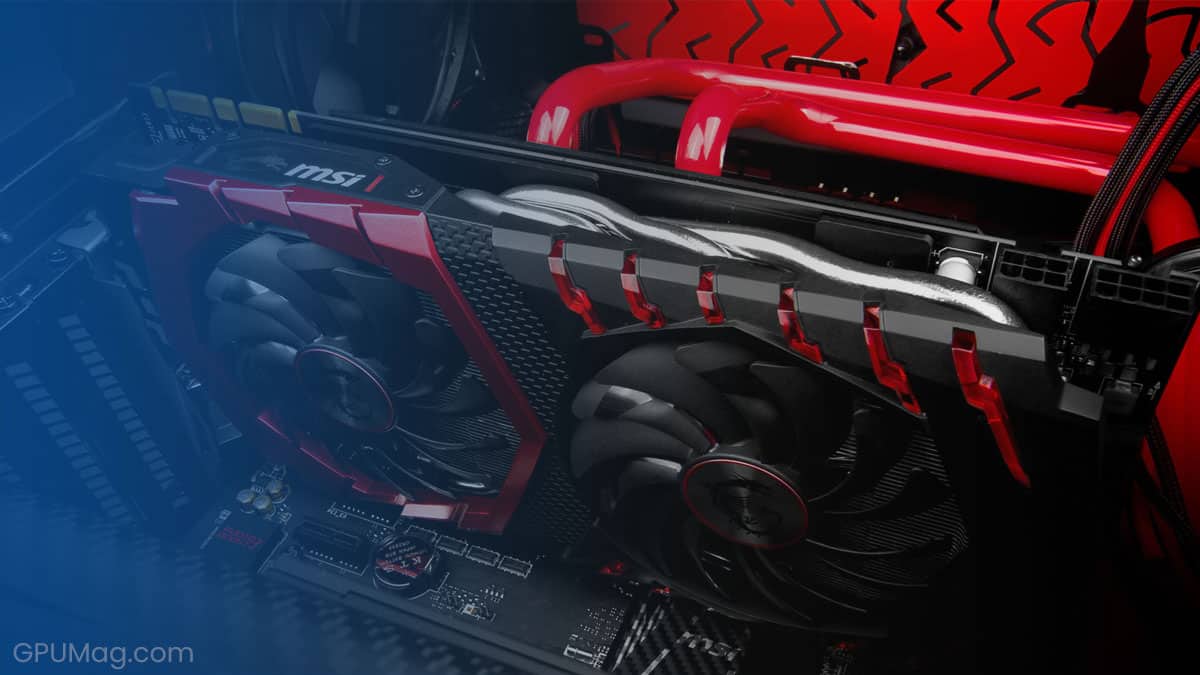
Surrounding the excitement of the RTX 3000 series being unveiled, much was said regarding the substantial improvements NVIDIA made to CUDA Cores.
If you have ever wondered what CUDA Cores are and if they even make a substantial difference to PC gaming, you’re in the correct place.
In order to comprehend what exactly CUDA Cores do, we will need to get a bit complicated.
Table of ContentsShow
What Are NVIDIA CUDA Cores?

As you might have already guessed, CUDA is an acronym that stands for Compute Unified Device Architecture, a parallel computing platform but also an application programming interface (API).
It was engineered by NVIDIA specifically to allow software developers to have enhanced control over the physical resources at their disposal.
A computer programmer coding in C or C++ now has a substantial deal of control over resource allocation. The CUDA system has enhanced the popularity and utilization of frameworks like OpenACC and OpenCL.
It’s interesting to note that, due to the remarkable flexibility of the CUDA API, various companies have used it for something other than PC gaming.
In fact, its potential uses are truly remarkable. Some of these include tasks such as computational chemistry, machine learning, data science, bioinformatics, computational fluid dynamics, and weather and climate applications.
CUDA cores are also parallel processors that allow data to be worked on simultaneously by multiple processors. This is similar to a dual-core or a quad-core CPU, except that there are numerous CUDA cores.
Do NVIDIA CUDA Cores Help PC Gaming?

**Of course!** The fact that CUDA Cores have a broad array of uses doesn’t mean that they don’t make a difference to PC gaming. In fact, NVIDIA CUDA cores are **a significant improvement to PC gaming graphics** because they are so potent.
We’re again going to be a bit technical, but ideally, we will be able to explain how some game graphics work and how exactly CUDA cores help.
In earlier times, a GPU was employed as an extension of the CPU to accelerate image processing. Leaping ahead 20 years, GPUs today handle various effects to provide a more authentic experience.
Unlike ray tracing cores (RT cores), which are dedicated to performing accurate lighting calculations to create lifelike shadows and other lighting effects, CUDA cores are primarily tasked with computational calculations.

NVIDIA can also boast about PhysX, a real-time physics engine middleware widely used by game developers so they wouldn’t have to code their own Newtonian physics. In the past, NVIDIA cards required a specific PhysX chip, but with CUDA Cores, there is no longer this requirement.
The exceptional power that CUDA Cores possess means game developers are free to place as much strain on the side of physics calculations as they desire. In terms of coding, that isn’t complicated, and the developers only need the gamers to possess the modern GPUs.
The CUDA Cores are exceptional at handling tasks such as smoke animations and the animation of debris, fire, liquids, and more. These are effectively all of the components needed to make game graphics look as authentic as possible.
They are a significant boost to PC gaming and have cleared the path for the even more realistic graphics that we have seen in the past few years.